Anexing China 165/55/15 Tyres at Shaharyar Traders, Lahore
A close look at the Anexing China 165/55/15 tyre at Shaharyar Traders, Khayaban-e-Iqbal Lahore — fitment tips, rotation basics and who this size suits best.
Why 165/55/15 shows up everywhere now
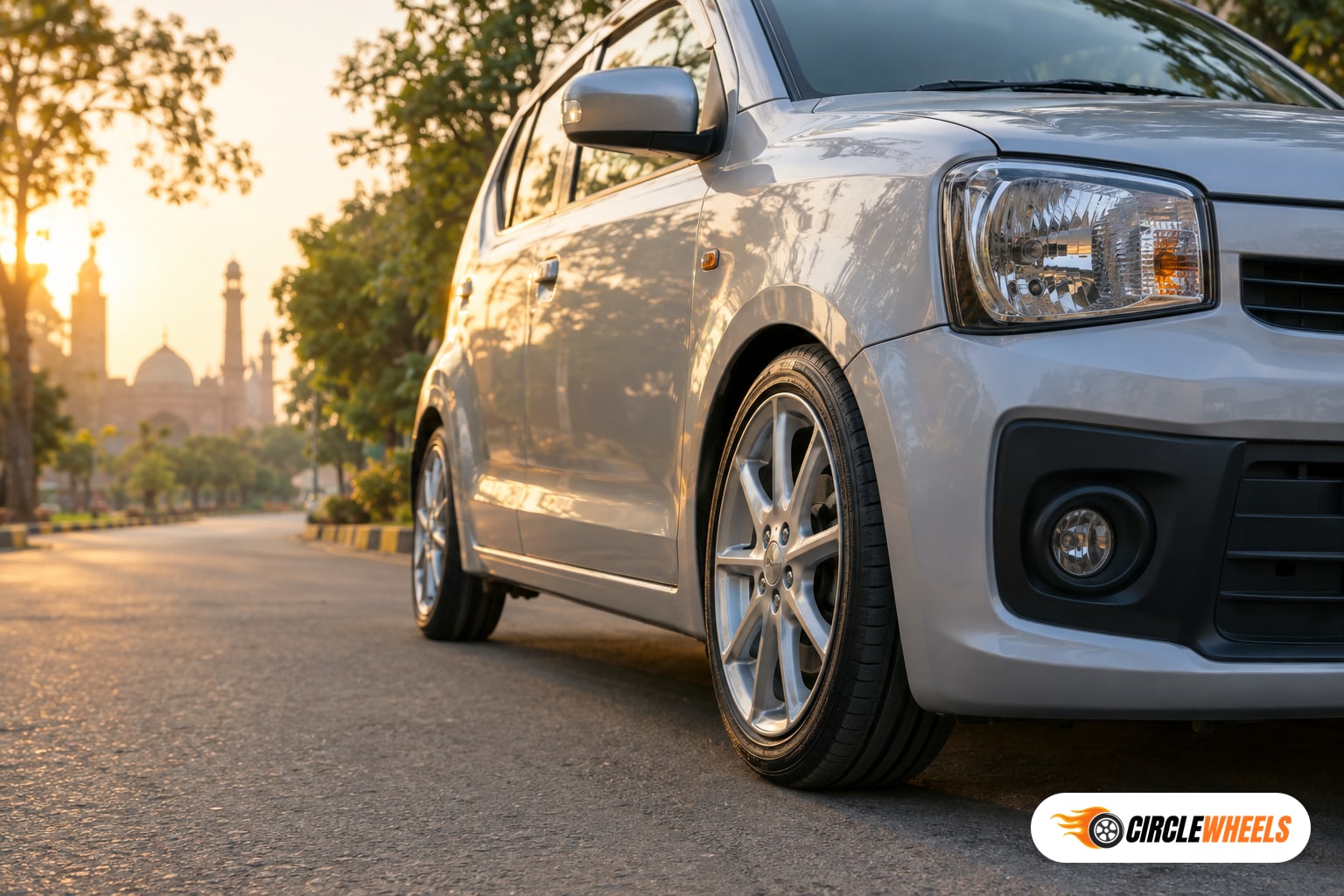
Walk through any parking lot in Lahore, Karachi or Islamabad and count the imported kei cars. Mira, Alto (Japanese spec), Wagon R, Hustler, Dayz, N-One, Move. A big chunk of them roll on 15-inch wheels with a narrow, low-profile tyre. That is where 165/55/15 lives.
The numbers are simple. 165 is the tread width in millimetres. 55 means the sidewall height is 55% of that width. 15 is the rim diameter in inches. Narrow tread, short sidewall, small rim. It is a city-car size, built for light vehicles that spend their life on urban roads.
That popularity is not an accident. Japanese used imports arrived in large numbers, and many of them either came with 15-inch alloys or got them fitted here. Owners upgrading from a 14-inch steel setup often land on this exact size because it keeps the rolling diameter close to stock while giving a sharper look and a firmer turn-in.
If you drive one of these cars, you already know the problem: this size is not always sitting on the shelf. Stock moves fast, and not every shop keeps it. So when a vendor has it listed, it is worth noting.
The Anexing China 165/55/15 at Shaharyar Traders
Shaharyar Traders in Khayaban-e-Iqbal, Lahore has the Anexing China tyre in 165/55/15 listed on CircleWheels. You can check the current price and vendor details on the Anexing China (165/55/15) at Shaharyar Traders, Khayaban-e-Iqbal Lahore listing page. Prices change, so always confirm on the listing rather than going off a number you read somewhere else.
Anexing is one of the Chinese-origin tyre names that has found a following in Pakistan, largely in the small-car and kei-car sizes that are hard to source otherwise. For many owners the practical question is not "is this a premium brand" — it is "can I get my exact size, from a shop I can reach, without waiting two weeks." In that sense, availability in 165/55/15 at a known Lahore address is the headline here.
What should you expect from a value-segment Chinese tyre? Be realistic. These tyres are built to do the everyday job: commuting, school runs, market trips, occasional motorway stints at sensible speeds. Judge any tyre on how it behaves when new, how evenly it wears, and how it handles wet roads — not on brand prestige.
What kind of driving it suits
This size and this category of tyre make most sense for:
- City commuting. Lahore traffic is stop-start. Narrow tyres roll easily, steer light and are kind to a small engine.
- Light kei and hatchback duty. These cars are under a tonne. They do not stress a tyre the way a loaded SUV does.
- Short highway runs at legal speeds. Fine for a Lahore–Sheikhupura or Lahore–Gujranwala trip.
Where you should think twice: constant high-speed motorway driving in June heat, heavily loaded cars, or rough kacha roads. A 55-series sidewall is short. Hit a deep pothole on Ferozepur Road at speed and the tyre and rim both take the punishment. That is true of any brand in this profile.
Fitment tips before you buy
Match the size exactly. Check the sticker on your driver's door jamb or the sidewall of your current tyre. Do not let anyone "adjust" you into 165/60/14 or 175/55/15 without understanding what it does to your speedometer and clearance.
Check the manufacturing date. Every tyre sidewall carries a four-digit code — week and year. Fresher is better, especially in Pakistan's heat. Ask the shop to show you.
Insist on balancing. Low-profile tyres on 15-inch alloys expose any imbalance as steering-wheel vibration around 80–100 km/h. Balance all four.
Get alignment done after fitting. New tyres on a misaligned car will show feathered wear on the shoulders within weeks. It is cheap insurance.
Replace valve stems. Rubber stems age and crack. Doing them at fitting time costs little and prevents slow leaks.
Buy in pairs at minimum. If you cannot do all four, put the new pair on the same axle — never one new and one worn on the same axle.
Rotation and maintenance basics
Tyres in Pakistan die from neglect more often than from mileage.
Pressure, every two weeks. Use the figure on your door sticker, not the number on the sidewall. Check when tyres are cold, before you have driven far. In summer, pressure rises as tyres heat up — do not bleed air out of a hot tyre to "correct" it.
Rotate every 8,000–10,000 km. On a front-wheel-drive kei car the fronts do the steering, the driving and most of the braking. They wear first. Rotation evens it out and adds real life.
Watch tread depth. Most tyres have wear indicator bars sitting in the grooves. When the tread is level with those bars, the tyre is done. In monsoon season, worn tread is the difference between stopping and sliding on standing water at a Lahore underpass.
Inspect the sidewalls. Bulges, cuts and cracking mean a replacement, not a repair. Curb strikes on 15-inch alloys are common in tight parking.
Do not overload. Kei cars are light for a reason. Five adults and a boot full of luggage pushes past what the platform was designed for.
The practical takeaway
If your car wears 165/55/15, your first job is finding the size locally without a long wait. Check the listing on CircleWheels for current price and vendor contact, then call Shaharyar Traders in Khayaban-e-Iqbal to confirm stock before you drive over. Ask for the DOT date, get the wheels balanced, and book an alignment the same day. Those three steps matter more to your tyre's lifespan than almost anything else you can do.